Monday, February 7, 2011

The ‘Mediation’ of Globalization

William Mazzarella’s article “Culture, Globalization, Mediation” is a useful piece on the processes of mediation[1] and how they correspond to the study of anthropology in the context of globalization. The function of mediation that Mazzarella is interested in is the way the media represent us. Focusing on the notion that the media affects the way we present ourselves and interact with each other, Mazzarella calls this process mediation. Our culture today is so reliant on the media to keep us informed about the world, they have almost become a social necessity. In his article, Mazzarella talks “about mediation as a constitutive process in social life; that the cultural politics of globalization, inside and outside the academy, involve a contradictory relation to mediation, on the one hand foregrounding the mediated quality of our lives and on the other hand strenuously disavowing it” (Mazzarella, pg 345), i.e. not taking any responsibility for it, even though they pretend to be broadcasting the truth. Through this, William Mazzarella illustrates the connection between media and culture and the inherent unreliability of media.
Today, globalization is affecting our cultural understanding of other groups around the world though a process of mediation. How, you might ask? To the mass population around the world, globalized markets and media have become part of public culture. Globalization as presented the media is a ‘global extension’, as Mazzarella has called it, of local consciousness, which, while it expands people’s awareness of global issues and connects them to daily life, also separates people economically, and seems to be becoming less viable in general.
The relationship between culture and media is dominated by the production and reproduction of certain ideas. In other words, the media create culture, to a large extent. It is essential to understand that, in this context, the media excels in making global events relevant or captivating to local social concerns. “Global events are ‘selectively domesticated … and presented in tandem with core social values. In order for people to understand it, global news must be filtered through the domestic system of commonsense knowledge or ‘local knowledge’” (Mazzarela, pg 353).  Because we filter this information as a collective group, we share a global culture (our interests) as long as this social process continues to maintain itself. Since the process of mediation touches on fundamental aspects in our daily lives, it has become a necessary tool in maintaining ties with our world and social groups. Perhaps because we are inundated with media hype from so many sources all day, every, we have come to believe that we need what the media are selling in order to be good citizens, further enabling the nodes of mediation to persist. “If, in fact, mediation is a dynamic principle at the root of all social life, then, having developed ways of theorizing it, we should move toward exploring its conditions and outcomes in social projects and movements that may not recognize themselves in those terms” (Mazzarella, pg 360). The relation between mediation and globalization has become so ubiquitous that, in a sense, it has brought people from around the world together, so that we have begun to filter information about ‘self though the other’ (361).
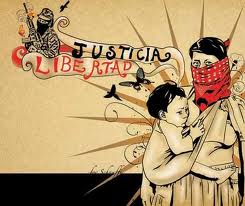
Having read Mazzarella’s article, I agree that mediation plays a big part in globalization. The globalization of mediation raises several themes, one of which is that technology is one of the driving forces behind of globalization. As technology advances, we become better at connecting ourselves with others around the world. However, the influences of technology and globalization should be taken very seriously. For example, in discussions of the issues raised by globalization, the merits of NAFTA have been shown to be questionable. This is because NAFTA has created a negative imbalance in labour that has led to an increase in violations of human rights and resources around the world, through cheap labor and multinational corporations taking over indigenous land and resources. The Zapatista movement in Mexico represents one of the rare instances in which the indigenous people (in Chiapas) thrived by ending their oppression and gaining back their land. Through this idea, I would like to illustrate that, even with technology—and though seemingly vital to our world—the mediation of globalization is not always a positive thing. For instance, it has caused many people in the Third World to fear the possibility of losing their culture. Yet, despite this, the media have an important role to play in bringing the world together and helping to raise consciousness about the injustices of globalization, which we should all try and do something to correct.


[1] Here defined as ‘the brainwashing effects of the media’.


Sources:


-Mazzarella, William. "Culture, Globalization, Mediation." Annual Review of Anthropology 33 (2004): 345-67. Culture, Globalization, Mediation. Annual Review. Web. <Vista UBC>. 

Do the Media Help in Crisis Situations?


The mass media are a collection of different means of communication that distribute information that connects us to world issues. After the introduction of the first mass medium, i.e., the newspaper, came television, the radio and, most recently, the internet. All of these mass media have since become a vital part of people’s lives, particularly for formulating perspectives on today’s most relevant issues. The media have allowed us to become greater participants in global events.  The cholera outbreak in Haiti, for instance, is a case in point. If not for the media, we would know little, if anything, about the Cholera epidemic in Haiti, which proves the crucial role the media play in informing the public of international catastrophes as they unfold.
The cholera outbreak in Haiti was said to have started after the devastating earthquake that hit Port-au-Prince in January 2010, with a magnitude of 7.0. The major destruction caused by the earthquake led to Haiti’s unsanitary state, which created a fertile environment in which the Cholera could spread. The Centre of Disease Control and Prevention states that there are two methods of this occurring, which have both been confirmed to exist in Haiti. http://www.cdc.gov/haiticholera/situation/ Today, the death toll rose to 1,344 and 57,000 have become sickened by Cholera.
Due to the media coverage, the overwhelming state of Haiti’s condition gained responses from communities all over the world. However, after a year of struggle, Haiti still suffers from Cholera. The number of deaths is predicted to rise well over 200,000.  Haiti’s state is in definite need of attention. Initially, after the earthquake, there were several graphic images of Haitian people buried under rubble, children covered with blood and hundreds killed. Unfortunately, this is something that catches people’s interest. “The graphic suffering of innocents made an inescapable appeal to conscience-and the humanitarian-aid business as we know it today came into being” (Gourevitch, Philip. pg. 102).  These images alone should not be the only provocation for people to tend to the needs of others. For example, if America were undergoing the same situation, would there be more press coverage than Haiti is getting? Would more people help? Would more people be informed? In my opinion, I think most people would be informed due to the fact that America is a superpower. However, when people are dying and suffering, why should a nation’s status or power be of any concern? The focus should be on the people who are in need of help. The cholera outbreak in Haiti has demonstrated the failure in relief work and its funders. “Meanwhile, billions of dollars of donations that could have provided permanent clean drinking water are collecting interest for the numerous charity organizations making a business out of poverty….The U.S. government itself, which has allocated $1.15 billion in earthquake relief funds to Haiti, has not yet delivered, for the most part” (http://www.progressive.org/mpdanto102710.html).
            Despite the aid that Haiti is receiving, most countries have not fully dedicated their strengths to helping Haiti rebuild. “That’s clearly insufficient for an adequate response to the epidemic,” says U.N spokesman Farhan Haq. With the power of the media, we should concentrate on the importance of neighboring nations and to provide hope in living without fear of cholera. This week the United States has been hit with a tragic loss due to the shooting in Arizona. If the same press coverage was given to Haiti or other countries suffering from mass poverty (Tanzania, Liberia, Burundi, Rwanda), perhaps more attention would be given to those suffering from everyday hunger, genocide, civil war, drought and disease.
As the audience of mass media, we must take part and help in the recovery of others. Despite the fact that Haiti has been suffering from political unrest, poor environmental conditions, poverty, natural disaster, and the outbreak of cholera, , through all this, hope still lingers. The difficulty in restoring the balance of Haiti is still in question. If the media played a bigger role in this matter, it could definitely show growing improvements in Haiti’s current condition. Our attention is vital in this matter. (http://www.globalissues.org/article/141/haiti)

Other sites that relate to this topic: 
-http://articles.cnn.com/2010-11-22/world/haiti.cholera.alert_1_cholera-outbreak-     cholera-epidemic-rehydration-salts?_s=PM:WORLD
-(quote from U.N spokesman Farhan Haq )
http://articles.cnn.com/2010-11-22/world/haiti.cholera.alert_1_cholera-outbreak-cholera-epidemic-rehydration-salts?_s=PM:WORLD
 Sources:
-Gourevich, Philip. "Alm's Dealers." The New Yorker Magazine. Print.